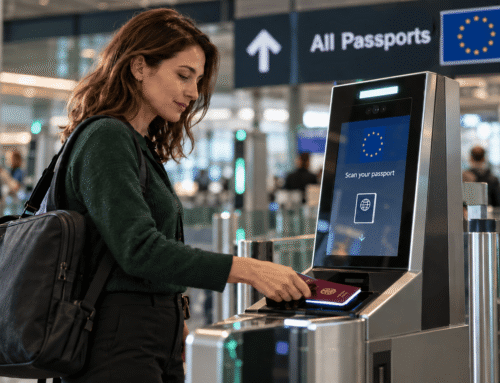


By 2030 Governments Will Do Half Your Job For You.
Digital identity wallets, biometric borders and real time compliance verification are not distant concepts. They are funded, legislated and already being deployed. Here is what that leaves for mobility to actually do.
Most futurism about this profession focuses on artificial intelligence adopted by companies. That is only half the picture. The other half is being built by governments, and it changes what mobility gets hired to do far sooner than 2035.
The target share of EU citizens and residents expected to hold a mandatory Digital Identity Wallet by 2030, verifying credentials and travel history in real time.
European Commission Digital Decade Policy Programme, 2026
The State Is Building The Verification Layer Itself
Governments are not building infrastructure that touches mobility indirectly. They are building the exact verification work the profession has been paid to manage manually for decades, and doing it at the border rather than inside a policy document.
- The EU Digital Identity Wallet becomes mandatory for every Member State to offer by the end of 2026, storing verified passports, visas and professional qualifications in one interoperable format.
- The European Commission has proposed an EU Digital Travel application, expected around 2030, that would fully digitise passports and identity documents at external borders.
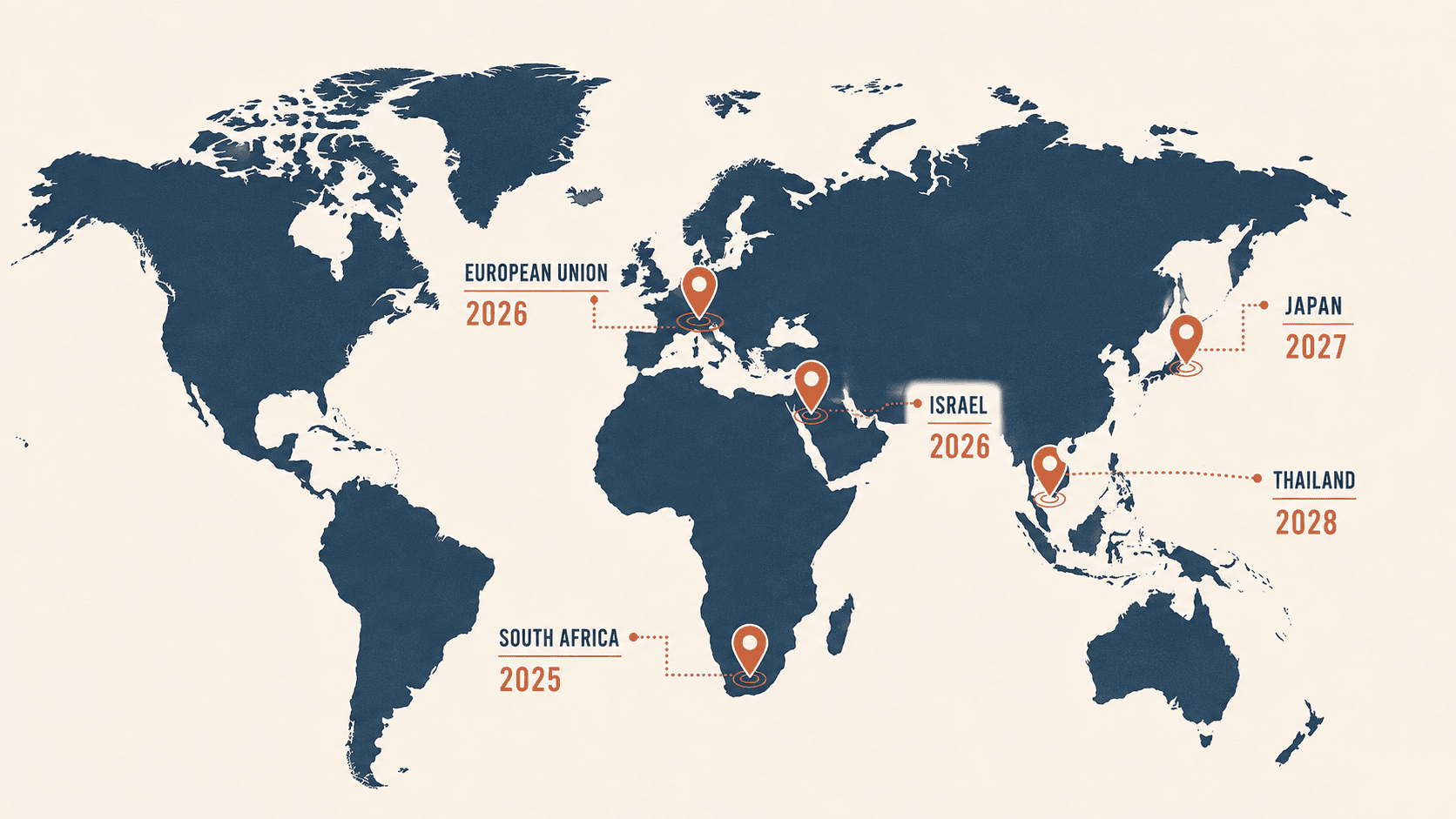
- South Africa is targeting its own digital entry system by 2029, and Japan is targeting 2030, showing this is a global pattern, not an EU specific one.
- Israel and Thailand both rolled out their own electronic travel authorisation frameworks in 2025, following the same trajectory as the EU’s ETIAS system.
Build The Part The State Cannot Automate
If compliance checking becomes something the destination country already knows instantly, the professional value has to move somewhere the state has no interest in going.
- Audit which parts of your current mobility scope are pure status verification, and treat that portion as a shrinking asset over the next three to five years.
- Invest development time now in the judgement heavy parts of a move, family decisions, career trade offs, exception handling, since no government system will ever verify those.
- Track these rollout dates directly rather than assuming EU deadlines will hold, since ETIAS itself was originally due in 2024 and has slipped before.
Governments are not automating mobility as a side effect of digitising borders. They are building the verification layer this profession has charged for, on their own timeline, and it lands well before 2035.

Pinewood is already building its client relationships around the judgement and human decision making that no border system will ever replace, rather than the compliance checking governments are absorbing. Get in touch to talk through where your mobility programme’s real value will sit by 2030.