


The Worker Putting Your Business At Risk Is Not On Your Payroll.
Illegal working liability now reaches contractors, agency and platform workers, and travels up the contract chain. Governments elsewhere are moving the same way.
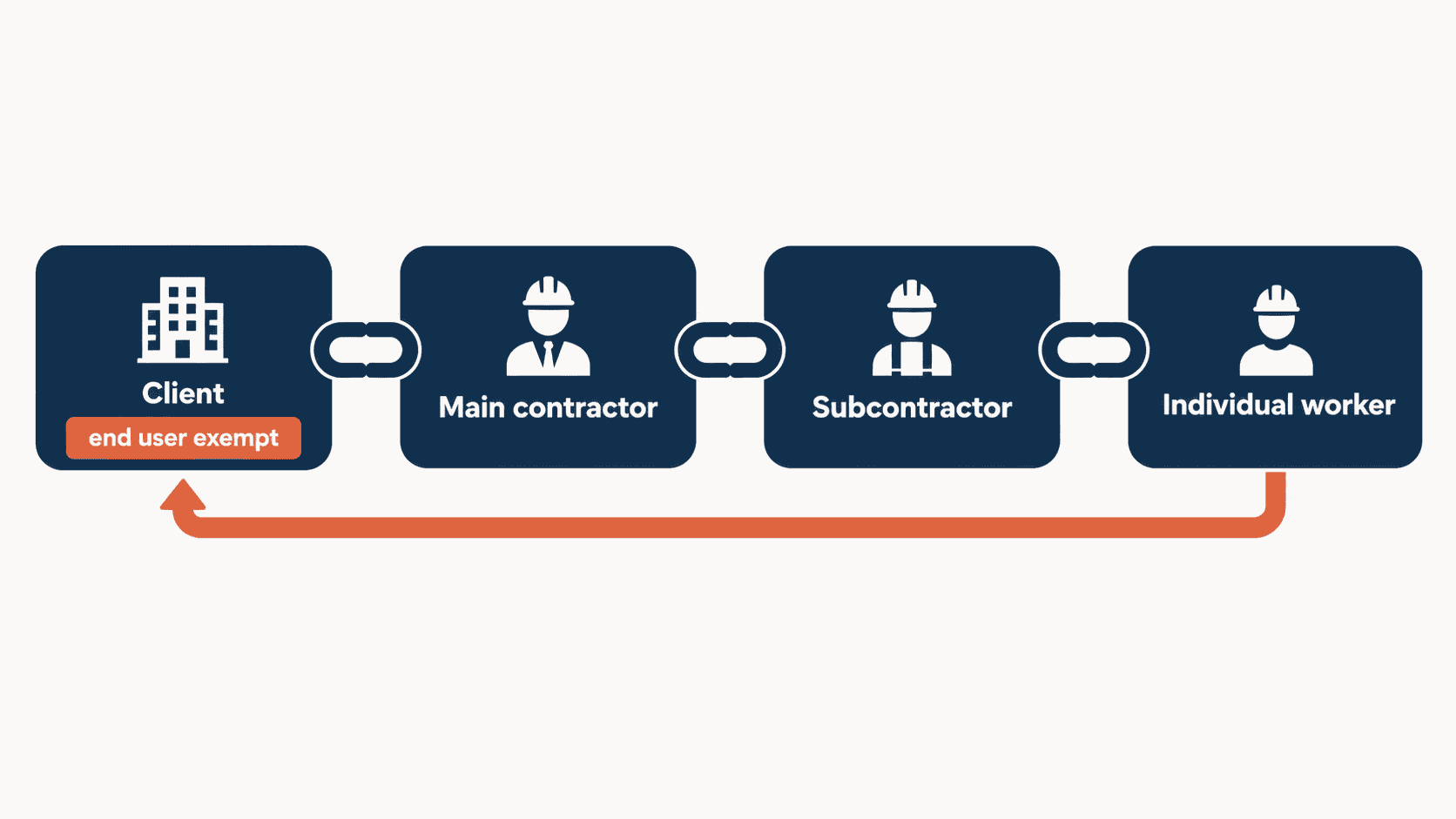
Until now, UK right to work duties sat with direct employers. From 1 October, section 48 of the Border Security, Asylum and Immigration Act 2025 extends them to agency workers, individual subcontractors and platform workers, and liability can reach every business in the contractual chain. It applies to engagements starting on or after that date.
The maximum civil penalty per illegal worker, with criminal liability possible where a business knew or had reasonable cause to believe illegal working was taking place.
Mishcon de Reya, 2026
A Global Pattern, Not A Quirk
The UK is the latest, not the first. Lawmakers are closing the gap that let companies treat a worker as someone else’s problem, and mobile talent sits right in that gap.
- The EU Employers Sanctions Directive already extends liability to intermediary employers where a main contractor or direct subcontractor knew illegally staying workers were hired, and the Commission is launching an evaluation of it in 2026.
- Flanders in Belgium introduced chain liability rules requiring contractors to request and verify residence and work documents for subcontractor workers.
- Australia’s employer sanctions already cover those who refer a non citizen to work, which reaches labour hire companies and employment agencies as well as direct employers.
- In the UK, a business at the top of a chain is protected only if it is an end user buying services for itself, not if it supplies the work onward.
Find Everyone Working For You
Your mobility data may be the best map of who is working across borders on your behalf, including people who never appear on your payroll.
- List every contractor, consultant and agency supplied worker placed in the UK since 1 October, and who carried out the right to work check for each.
- Check contracts with agencies, employer of record providers and subcontractors for a clause requiring right to work checks and evidence on request.
- Find out whether any engagement allows a substitute to step in, since a substitute who starts without a check can create liability.
- Record the date of each check, because protection from a penalty depends on proof.
Immigration compliance used to stop at your payroll. In the UK it now follows the work, and other regimes already do the same. Whoever can see who is moving needs a seat at the compliance table.

Pinewood helps clients map who is actually moving, employed or contracted, and builds right to work document timelines into the move, alongside each client’s own immigration advisers. Get in touch to put us head to head with who you use now.