


The Shipping Fix Everyone Adopted Does Not Cover The Gulf
A second Middle East chokepoint closed in February, naval assets shifted to cover it, and Somali piracy has since returned at its highest rate in over a decade. Here is what that means if your shipments cannot avoid the Gulf.
Most mobility teams already know the Red Sea story from 2024. What has not landed yet is that the picture changed again this year, and the industry’s fix for it does not apply to a sizeable share of this readership’s own shipments.
Piracy related incidents recorded across Somali waters and the Gulf of Aden since January 2026, prompting UKMTO to raise its regional threat assessment from substantial to severe.
Castor Vali, UKMTO, 2026
One Crisis Is Quietly Causing The Other
On 28 February 2026, a joint US-Israeli operation against Iran forced the closure of the Strait of Hormuz, on top of an already disrupted Red Sea, and major carriers suspended Hormuz transit entirely. Naval vessels normally stationed in the Gulf of Aden and Somali Basin were redirected to cover that escalation, and with fewer warships on patrol, Somali pirate groups moved back into open water for the first time in years.
- Houthi forces struck commercial vessels again on 6 July, their first attack on shipping since 2024, ending any assumption that the disruption was winding down.
- At least three commercial vessels remain under pirate control as of early June, seized using mothership tactics last seen at the height of the 2011 piracy peak.
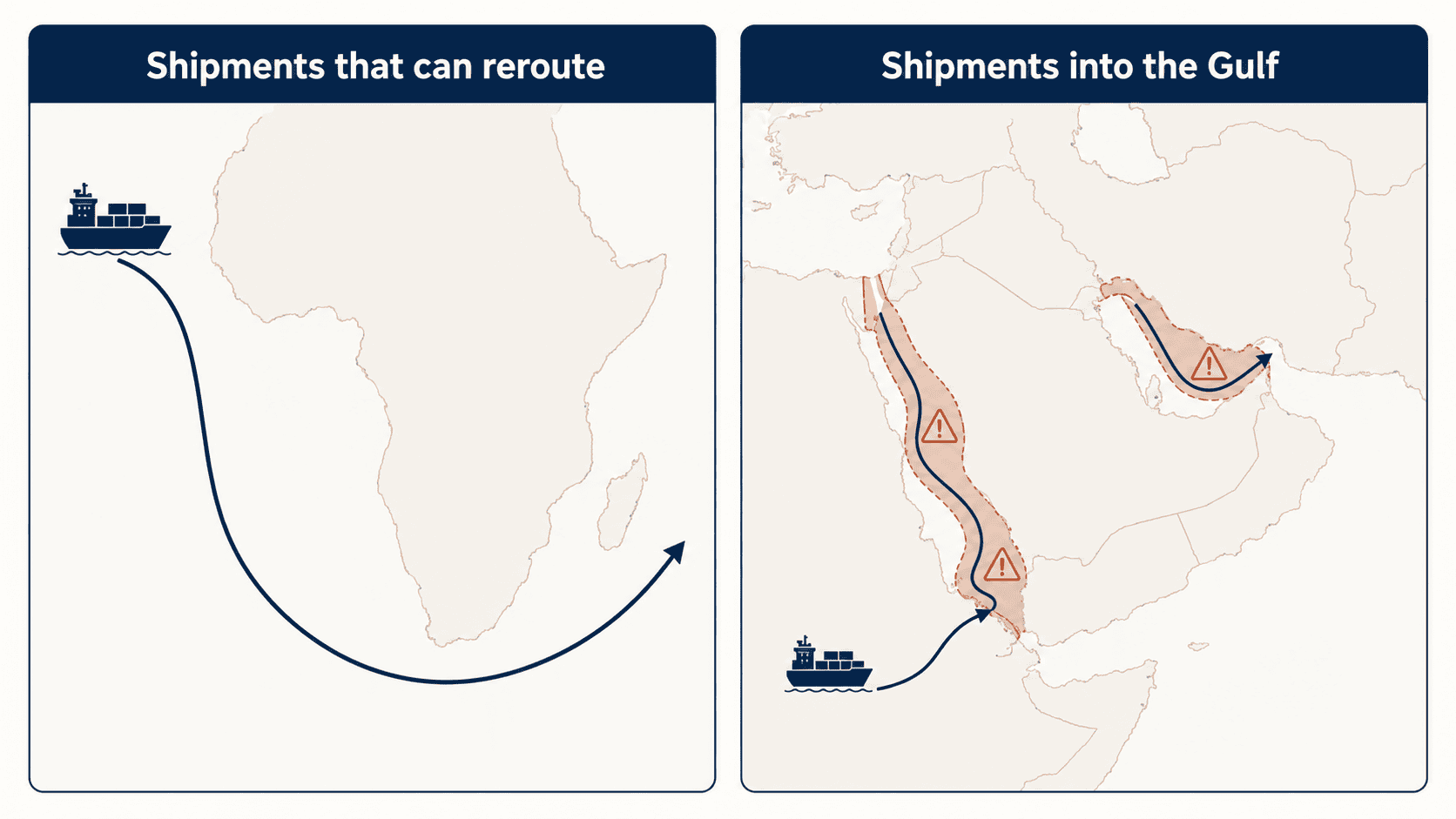
- The Cape of Good Hope reroute adds 10 to 14 days and roughly 30 percent more fuel cost per voyage, but it only protects shipments that do not actually need to enter the Gulf.
- Relocations into or out of the UAE, Saudi Arabia and Qatar cannot be rerouted around the problem, because the Gulf is the destination, not a waypoint.
Treat October As Your Deadline, Not December
What Gulf Bound Shipments Need Now
- Ask your forwarder directly whether Gulf bound shipments carry current war risk cover, not last year’s policy, since premiums have moved sharply since February.
- Build a minimum four week buffer into any Gulf relocation timeline now, rather than adjusting after a delay is already confirmed.
- Request convoy or escorted transit options for high value household goods shipments into UAE, Saudi Arabia or Qatar specifically.
The Cape reroute solved last year’s problem for shipments passing through the region. It does nothing for shipments going into the region, and that gap is exactly where this year’s risk now sits.

Pinewood works with maritime partners who track war risk and piracy advisories daily and adjust Gulf bound shipment routing and insurance in real time, rather than applying a generic industry response. Get in touch to review the current risk position on any Gulf bound move.