


The Hidden Judgement Call Behind Every Relocate Or Redundancy Talk
Delivering the news is not the hardest part. The manager in that room is often, unknowingly, deciding whether someone keeps their financial safety net at all.
Most conversations about manager wellbeing during restructuring focus on how emotionally hard it is to deliver bad news. That framing understates what is actually happening in a relocate or redundancy conversation specifically, and misses why these particular conversations are proving so corrosive.
The share of HR leaders reporting burnout in recent research, with 94 percent feeling overwhelmed in the past six months and 88 percent saying they dread going to work.
Spring Health, 2025
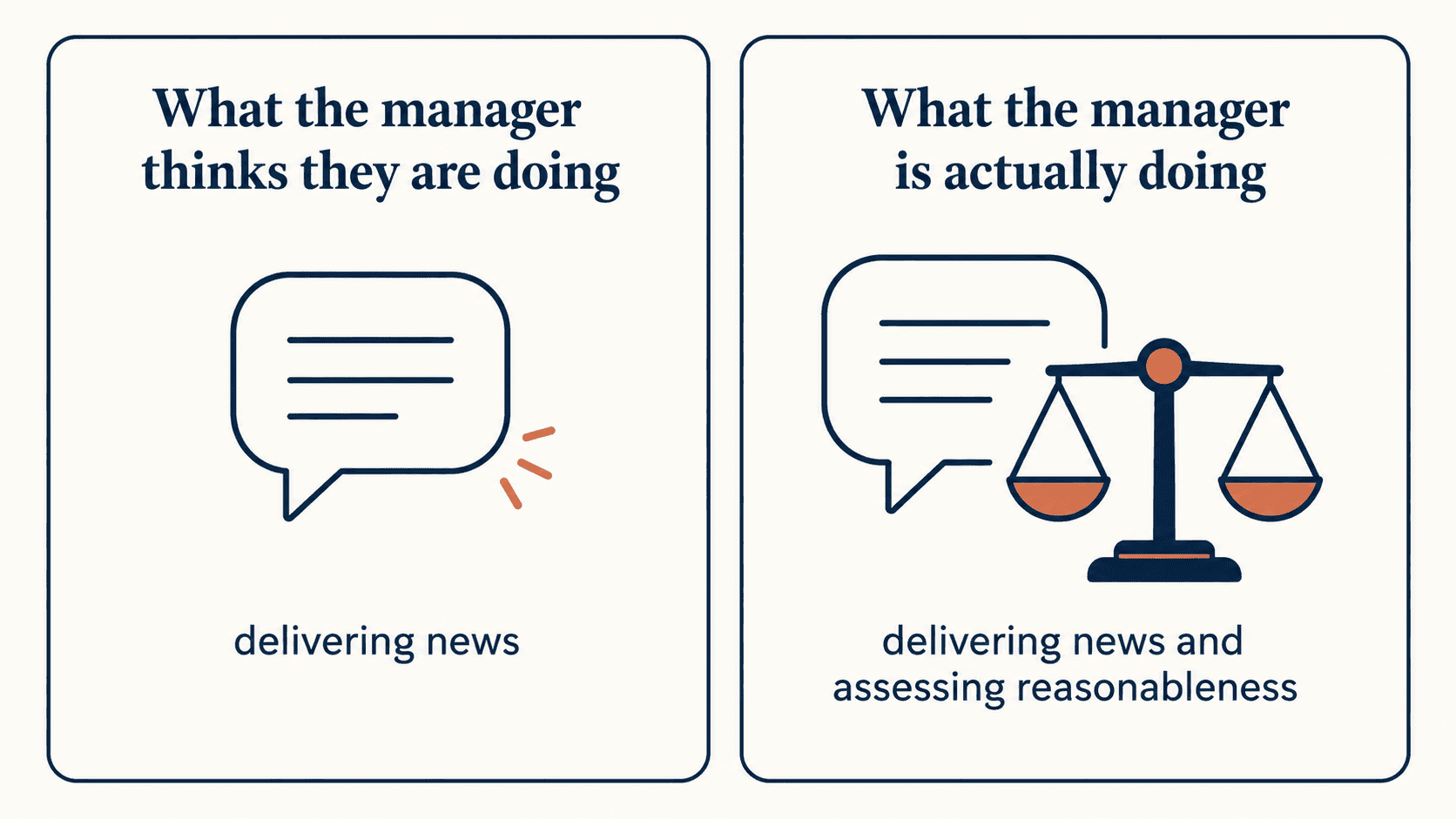
A Legal Judgement Disguised As A Conversation
Relocation is frequently offered as a suitable alternative role under redundancy law, not as a standalone ultimatum. Whether an employee’s refusal counts as reasonable, protecting their redundancy payment, or unreasonable, forfeiting it entirely, often hinges on how the conversation is handled and documented by the person delivering it.
- A manager assessing family circumstances, a working spouse, or a child mid school year is, in effect, weighing evidence that could determine someone’s financial outcome, usually with no legal training to do so.
- Managers who deliver this kind of hard news commonly report acute guilt lasting weeks, with effects on their own wellbeing rippling for months afterward.
- 77 percent of HR leaders believe internal redeployment could reduce the need for these conversations altogether, yet only 19 percent of employees say such opportunities are actually offered to them, meaning many managers know the ultimatum was not the only option available.
- Employees who witness colleagues go through this process report reduced trust in leadership even when their own role is never at risk.
Separate The Two Roles Before The Conversation Happens
A manager cannot be expected to carry a legal judgement and an emotional conversation in the same breath without support built in advance.
- Give managers a written framework for what counts as reasonable refusal before the conversation, not left to their own instinct in the room.
- Route the reasonableness assessment through HR or legal after the conversation, so the manager’s role stays limited to delivering the news honestly.
- Offer a structured debrief for the manager afterward, not just the departing employee, given the documented weeks long guilt response this specific conversation produces.
A relocate or redundancy conversation asks one person to be messenger and unofficial judge at the same time. Separating those two roles protects the employee’s outcome and the manager’s wellbeing in the same move.

Pinewood supports mobility and HR teams in building the practical alternatives, redeployment options, and documentation structure that take the judgement call off any single manager’s shoulders. Get in touch to talk through how your organisation structures these conversations today.