


Europe Called It Simplification. Your Short Trips Will Get Harder.
Mandatory prior notification is coming to A1 certificates, the exemption is narrower than most employers assume, and the preparation starts now.
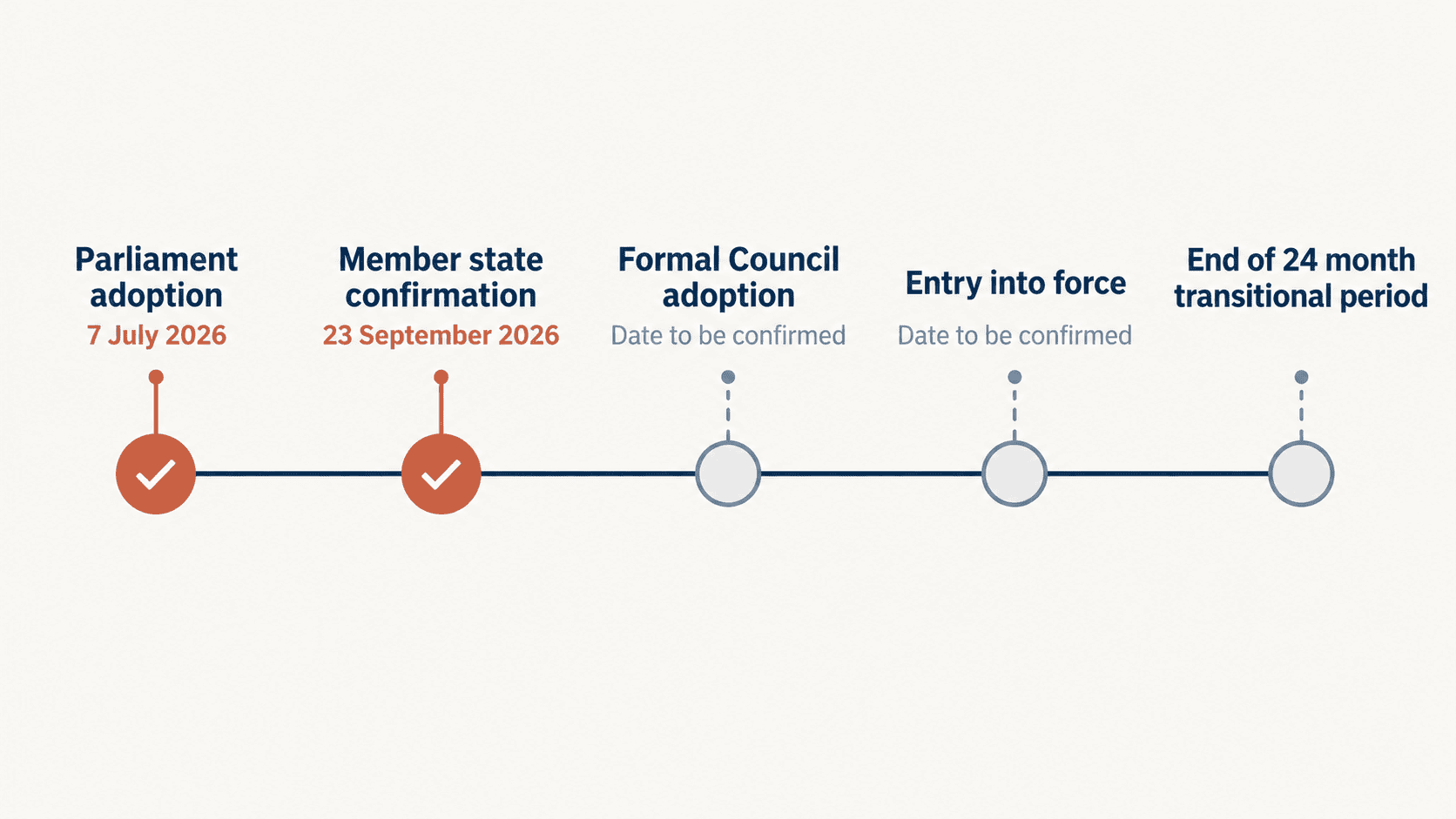
Parliament adopted the text on 7 July. Formal Council adoption and the entry into force date are still to come, and a 24 month clock for some elements starts when they land. That makes this a preparation window, but habits take longer to change than forms do.
The exemption for short work in another member state, up to three consecutive days in any thirty day period, with construction excluded.
Remote Work Europe, 2026
Simplification Means Earlier, Not Easier
An A1 certificate proves which country’s social security system applies to a worker. Making prior notification mandatory means that proof has to exist before the work happens, not after it. Anyone working repeatedly in another member state will sit inside the requirement rather than outside it.
- Today there is no clear rules based answer on when an A1 is needed, so employers lean on practical readings. The reform replaces that flexibility with a default requirement.
- The exemption covers genuine business trips, newly defined to exclude commercial activity such as supplying services or goods, plus work of up to three consecutive days in any thirty day period.
- Posted workers will need at least three months of prior home country social security cover before a posting starts.
- Construction is excluded from the three day exemption altogether.
Audit Your Short Trips This Week
You have a runway, but the trips most at risk are the ones nobody logs. Start there.
- Pull twelve months of travel and secondment data for EU destinations and flag anyone who worked more than three consecutive days in the same member state within a thirty day period.
- Check every commuter and rotational arrangement for a current A1, since repeated work in another member state falls inside the requirement.
- Ask your tax advisers who requests the certificate in each destination and how long it currently takes, then add that lead time to move and travel timelines.
- Check that every planned posting meets the three month prior cover rule, particularly for recent hires.
The reform does not remove paperwork for short trips. It moves it to before the trip. Any process that records travel after the fact will fail the new test.

Pinewood builds notification and certificate lead times into move and travel timelines, working alongside each client’s own tax and immigration advisers. Get in touch to check whether your short trip timelines can absorb a prior notification step.