


The School Place Problem Is Timing, Not Money.
International schools are not competitive because there are too few of them. They are competitive because local families now want the same seats, and the academic calendar does not care when your business needs someone to arrive.
Every relocation policy treats schooling as a comparison exercise, which school is best, which curriculum suits the child. That framing misses what is actually deciding whether a place exists at all.
The share of international schools worldwide now offering bilingual provision specifically to attract local, not expatriate, families.
ISC Research Global International Schools Snapshot, 2026
Local Demand Has Quietly Taken Over
International schools were historically built to serve mobile expatriate families as their core market. That has flipped. Local families now drive the sector’s expansion, competing for the same English medium, globally portable places that assignees assume are reserved for them.
- Dubai’s private school population exceeds 380,000 pupils, with some operators reporting 40 percent enrolment growth driven as much by local population growth as by expat arrivals.
- Singapore’s government run AEIS admission cycle for expat children opens in June or July for a January start, and families arriving after roughly March miss that year’s window entirely.
- IB and IGCSE programmes run on two year cycles, which effectively closes certain entry years mid programme regardless of how strong a family’s application is.
- Berlin’s most attractive tuition free bilingual state schools are oversubscribed specifically because they are free, pulling local demand directly into the pool assignees are competing in.
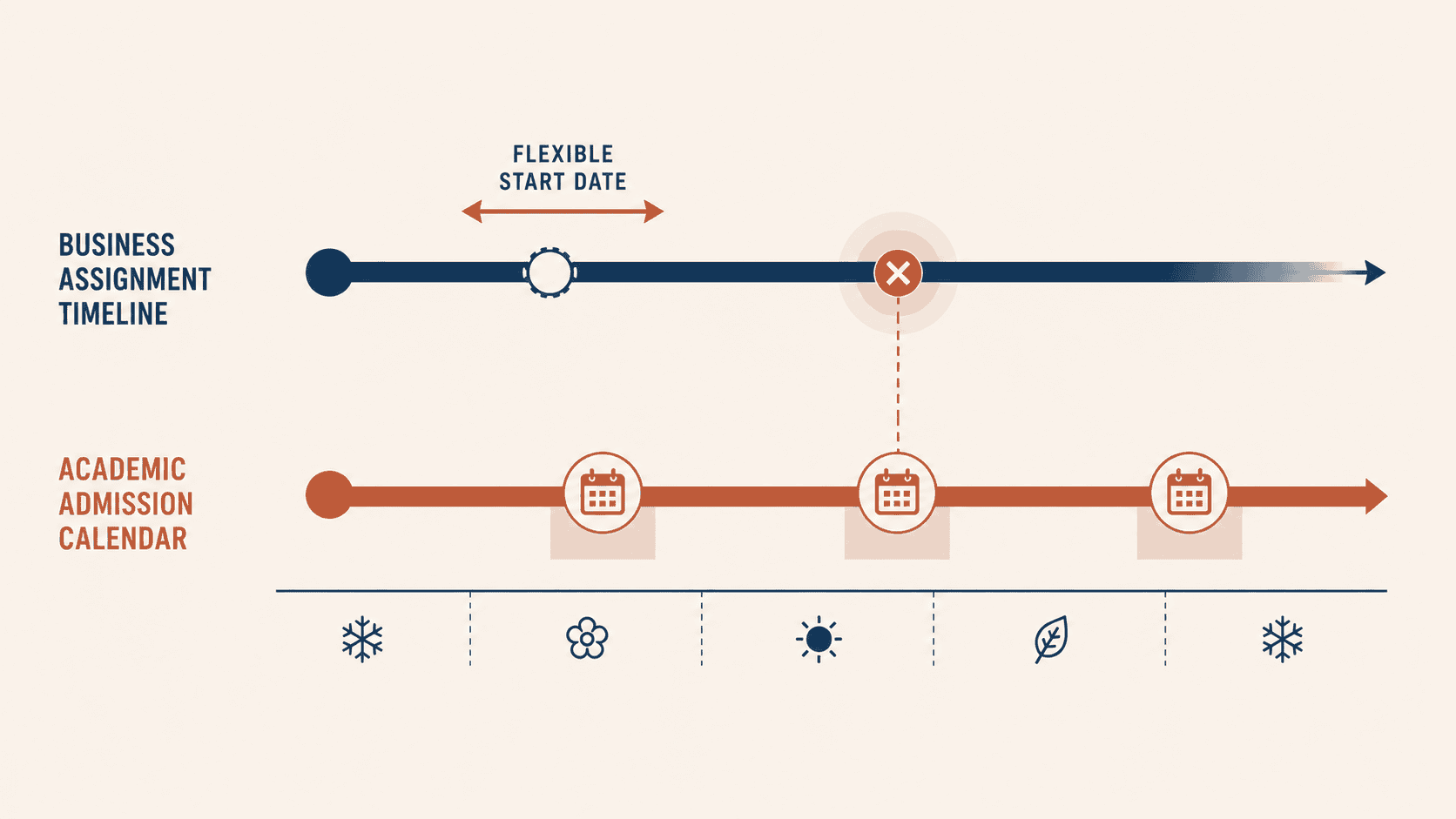
Plan The Start Date Around The School Calendar
The fix is not a bigger schooling budget. It is sequencing the assignment start date against a calendar the business does not control.
- Confirm the destination country’s specific admission windows before the assignment start date is finalised, not after the family has already arrived.
- Ask whether the target school runs a two year programme cycle, and avoid landing a child mid cycle wherever the business timeline allows flexibility.
- Build a fallback place at a less oversubscribed school into the relocation plan from day one, rather than treating it as a failure if the first choice does not work out.
A relocating family does not lose a school place because the market lacks capacity. They lose it because the assignment start date was set by the business calendar, not the academic one, and nobody checked whether the two lined up.

Pinewood maps school admission windows against the proposed assignment date before it is confirmed, so families are not left discovering a closed cycle after arrival. Get in touch to check school timing before your next assignment start date is set.