


Your Relocation Budget Is Out Of Date Before The Board Sees It
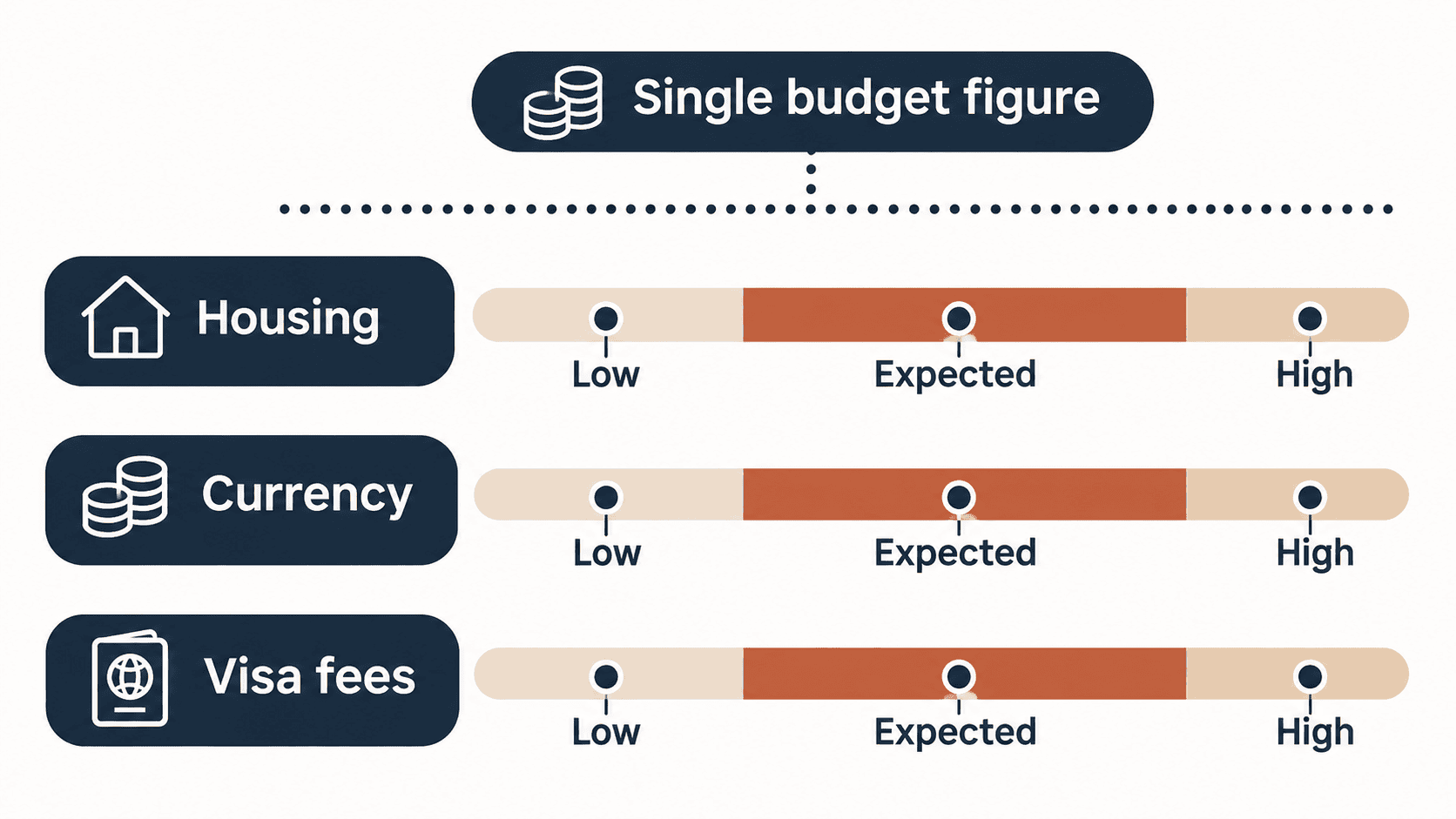
Currency, rents and visa rules move faster than approval cycles, so the safer budget is a range built with your partners.
Worldwide ERC figures put the average cost of relocating an employee close to $77,000, and above $300,000 for long assignments. At that scale, small shifts in exchange rates or rents become large differences. Rules change cost too: the United States $100,000 H-1B payment has been extended to September 2027, yet is not currently being collected because of two court orders.
The approximate average cost of relocating one employee, with long assignments exceeding $300,000.
Worldwide ERC via Business Traveller, 2026
Four Things That Move Your Costs
Cost pressure rarely comes from one place, and the pieces move in different directions at once. A budget built on one set of assumptions is a forecast, not a promise.
- Currency: a weak yen cut Tokyo’s ranking by 19 places, while a stronger Australian dollar lifted Sydney by 14.
- Housing: ECA recorded rising rents in Sydney, Canberra and Perth, and an 11% rise in accommodation costs in Kinshasa.
- Policy: visa fees and rules can change cost overnight, and the H-1B payment shows they can also change status in court.
- Delay: conflicts, sanctions and nationality based restrictions can slow visas and force rapid redeployment, which adds temporary housing and travel cost.
Hold Partner Round Tables Before Approval
Your suppliers see real costs across many programmes, so ask them to challenge your assumptions before the board does. Bring specific questions rather than a general request to save money.
- Share forecast move volumes and ask each partner to show where costs have moved over the last twelve months.
- Ask for low, expected and high cost scenarios for your top three destinations, including currency and rent changes.
- Review which benefits are used and which are not, and test tiers or lump sums where assignees value flexibility.
- Compare how long temporary housing is usually needed in each destination, and what would shorten it.
- Agree in writing which partner owns which saving, with a date to check the result.
Cost pressure is easier to manage before approval than after it. A range built with your partners is more credible to a board than a single number that has already moved. Ask the questions now.

Pinewood runs round tables with mobility teams ahead of budget approval, looking at where cost is rising in each destination and which provisions could be delivered better for less. Get in touch to book a round table before your next budget goes to the board.